Showing posts with label Landscape. Show all posts

Thursday, 4 February 2016

Connecting Essay


This photo was taken by me in London when we visited Trafalgar Square, this photograph is similar to Rut Blees Luxemburg's work because it is showing the night life in London. I think that Luxemburg's photo was taken with a slower shutter speed because her photo shows a lot more light, my photograph has quite a quick shutter speed in contrast, however my photo shows a lot of light, similar to hers.

This photo was taken by Rut Blees Luxemburg, I think it shows a lot of movement, whilst also showing how empty London is, many people can pass and it can still feel like nobody is actually there, I think that my photo shows a similar message, it shows us how fast people can move by. Her photo shows this a lot more subtly than mine, because at first glance you might not notice the lights on the road.


Overall, I think that these photos show us how fast London moves and how lonely it can feel, even when hundreds of people pass by.


Wednesday, 20 January 2016

Straight Images - Landscape

 This is my final edit of the photograph, I took this using the settings f.22 and iso 200, the shutter speed changed depending on how dark it was because my camera was on aperture priority. I used rotation to level this photo out more because although I used a tripod, I didn't set it up very well so it was a slanted photograph. I also edited it using curves, I made the photograph a bit darker but I'm not sure if I like it because I think it might look too dark 

This is the original photograph, it is slanted and therefore I don't think it looks very good, it looks quite unprofessional unlike the edited photo.

 I didn't need to straighten this photograph because it was already straight, however I decided to make it black and white, slightly inspired by Ansel Adams, however Adams used a very big contrast in his photos, I didn't want to do that because I didn't think it would look that good in this photo. I used f.3.5 and iso 3200 for this photo, I should've used a tripod for this photo like I did with the last one, it would've been better and I could've taken a better photo.


I really liked this photo because it looked very urban, however I felt that as it's meant to be inspired by Rut Blees Luxemburg, that it was too bright, I couldn't take this photo at night like she took her photos but I tried to make it darker using saturation, I lowered the saturation of the photograph. By doing this I made the photo have a higher contrast, similar to Ansel Adams photo's.

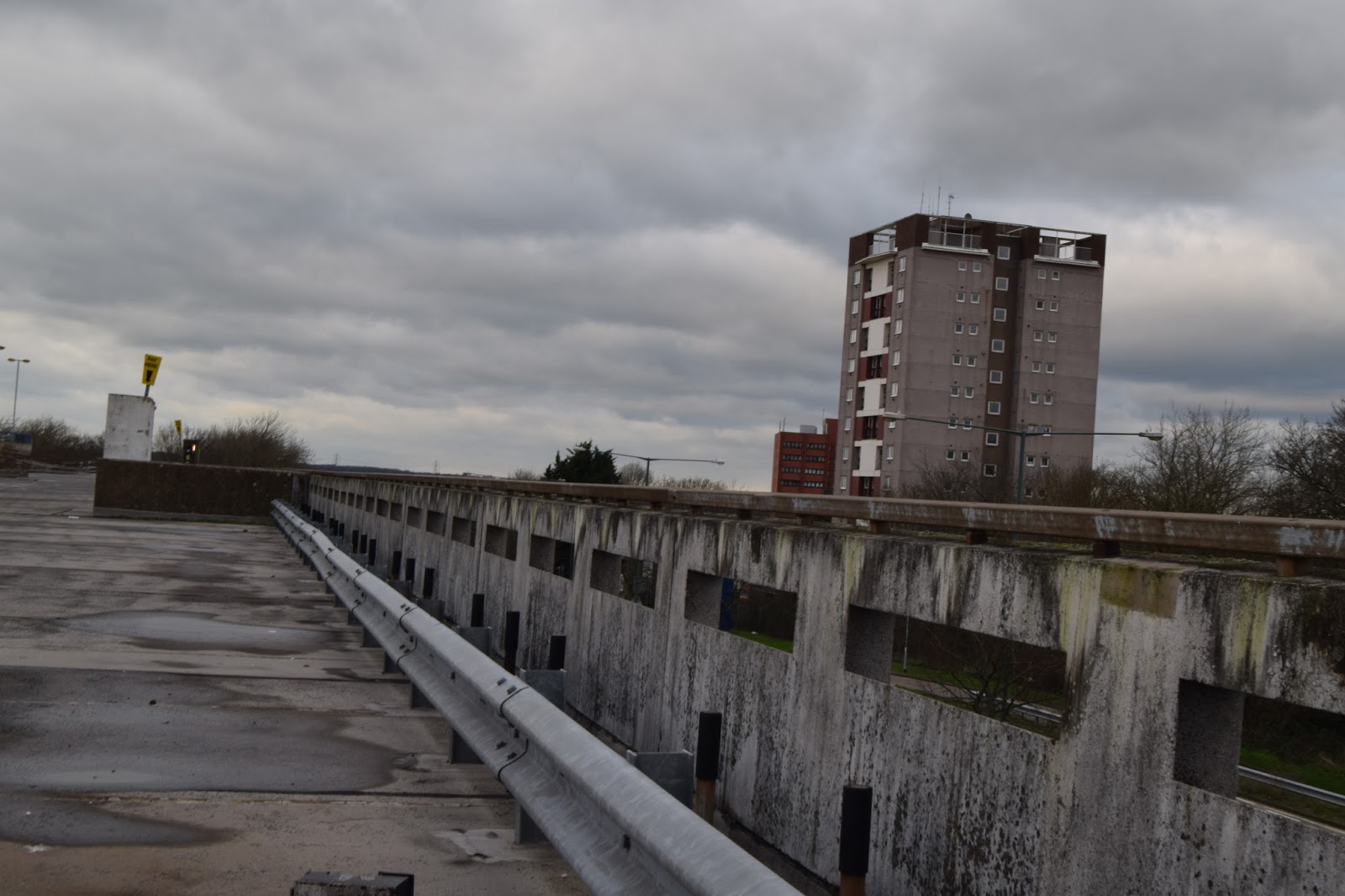
 This is another of the landscapes that I took a photo of, this is a very urban photo and because I chose Luxemburg's photos to be inspired by, I made it darker using hue/saturation and I did this because her photos are taken at night, however her photos are typically lit by artificial light coming from buildings, none of the buildings lights were on which makes the photo just seem dark. I love this photo though because I can see so many buildings and I think that grey doesn't always have to be a boring colour.


I had to change this photo quite a lot because it was very slanted, which meant that a lot had to be cropped so it isn't as good as it could've been. I also changed the hue/saturation because I thought it looked a bit dreary and very light.


Tuesday, 12 January 2016

Artist Research - Rut Blees Luxemburg

Analysis Post - Rut Blees Luxemburg

This photograph of an urban landscape by Rut Blees Luxemburg is very good in my opinion, I love the colours that she uses, it makes the photo look like it was taken at night and lit artificially, which it likely was. I also like the hight and angle it was taken at, the birds eye view angle was very well used because it shows the cars at the bottom, it also gives a sense of mystery because we don't know what sort of building this was taken, it could've been a car park or it could've been a block of flats. This photo is called 'Vertiginous Exhilaration' - Vertigo is the sensation that the space around you is moving or spinning and many people get this from being at great heights, it makes it hard to stand and you are more likely to fall over if you have vertigo. The title is related to Vertigo and makes you think that the photographer felt as though they were going to fall.

This is another landscape by Luxemburg, I love this photograph, the colours she has used in this photograph are very warm browns, reds and yellows that make it look old and cosy, the colours used are similar to the sepia filter used in very old photographs. I also love that this was taken in the late evening, when some people have their lights on and some people have them off because they are asleep, it makes you feel like you have some sort of connection with them. The photograph is called 'Towering Inferno' which is why she used the warm reds and oranges I think.

This is a photo of another urban landscape by Luxemburg, I can tell she has used a slow shutter speed for this photo because I can see car headlights going past in a line but no cars. I think this photo is lovely because it is showing rather warm colours from the cars on the road that is a dark grey or greenish, the majority of this photo has quite cool colours. I think it is interesting that she has got a photograph of playgrounds next to motorway as this isn't a common occurrence in many places. This photo is called 'A Modern Project', I think she called the photo that because it shows so much modernisation with the roads and the fact that the whole photo is lit up by street lamps.

Rut Blees Luxemburg is a German photographer who takes photos in London, these photos are usually taken at night. She uses long exposure so that she can use the light emitted from London instead of using her own light, long exposure makes the lights look like they are glowing. She uses a 5 x 4 camera that 'requires slowness'. The colours and tones she uses makes her work recognisable in an instant because of the cold greens/blues next to the warm oranges and reds.


Definition Post - Landscape & Ansel Adams

To take landscape photographs, we need:

  • A camera
  • A tripod
  • Zoom lens
  • Wide angle lens
  • Rain sleeve
  • Lens cleaner
  • Fliters
  • Spare Batteries
  • Memory Card

Definition: 

Landscape photography shows spaces within the world, they can be incredibly vast photographs or they can show only a small patch of land. Landscape photographs usually capture nature but they can also capture man made objects.

Analysis of Ansel Adams' Work:

I think Ansel Adams' work is odd, his photos look very edited and quite grainy. I think that the sky looks unedited but then the amount of bright light on the mountains instead of shadows make the rest of the photographs look very edited. Ansel Adams uses pre-visualisation to have an idea as to what the photo will look like.

This is another photograph by Ansel Adams, I like this photo more than the last because it looks more realistic and a lot less grainy. I think the colours contrast a lot more in his photographs than some other black and white photographs, this may be because the whites are a lot brighter and the blacks are a lot darker. I like this contrast even though I don't really like his photos that much in general. His photographs have a wide depth of field which I think looks really good because if he used a narrow depth of field we wouldn't be able to see detail in everything and I think that the photo needs that.

This photo by Ansel Adams is very unrealistic in my opinion, I don't like it as much as the second one because it's a lot lighter and personally I prefer darker photographs. I think that the water falling from the rocks and hitting the river surface look very fake and over edited. personally I prefer photographs that are subtly edited and don't look unrealistic.

Ansel Adams got his inspiration from Yosemite National Park and he took black and white landscape photographs of it. He was a co-founder of the group f/64, this group was made up of seven photographers in the southern California area, after the Great Depression in America, the pictures that group f/64 took were of natural objects and were sought after by the public because they were a sign of hope in a bleak time, they were seen as a sign of hope because of massive public work projects like Hoover Dam. 
Adams primarily used large format cameras because they had a higher resolution. He also created the Zone System with Fred Archer as a way to determine proper exposure and adjust the contrast of the final print.

F/64 refers to the smallest aperture on a camera, the effect that having a camera at f/64 would be that the photograph would have a very large depth of field, meaning a large amount of the photograph would be in focus, they saw the camera as a passive viewer of the world, so they didn't want to focus on any particular object and detract away from the rest of the photograph.

He inspired me to look into rural photography more, and he also inspired me to experiment with slower shutter speeds and using a tripod, I definitely want to use my tripod more because I think it gives me the option to get steadier photographs